Energy and the environment
Emissions, life cycles, efficiency, air quality and climate, always with sources.

Two ways to count emissions
Emission figures travel without context. A headline number may be a combustion value, a life-cycle value, or a value per unit of fuel instead of per unit of energy. This topic teaches you to ask which one you are looking at.
Burning a fuel releases CO2 at the moment of use. Those are combustion emissions. A life-cycle count adds the steps before and around that moment, such as growing, extracting, refining and moving the fuel. Combustion vs life-cycle emissions explains why both numbers exist and why they should never be swapped or added together.
How a life-cycle assessment of a fuel is built opens up the method, including the system boundaries researchers must choose and the GREET model. Once you see how the number is made, a different result from another source stops being a mystery.
Gases, particles and efficiency
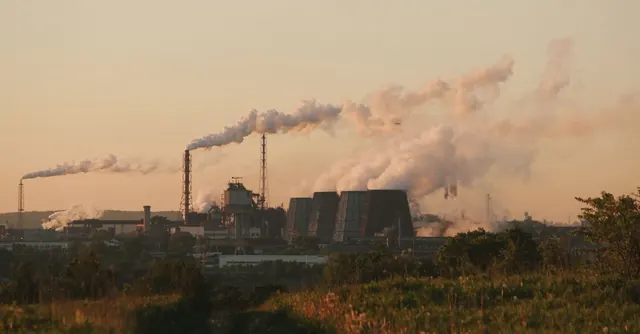
CO2 is the greenhouse gas most closely tied to burning fuel. CO2 emissions per unit of energy compares fuels on an equal energy footing, and From burning fuel to the greenhouse effect explains how CO2 traps heat.
Air quality is a separate question. Air pollutants from burning fuels covers NOx, particles, SO2 and CO, and how they are regulated. Two further articles take other views. One separates energy efficiency from fuel economy and shows where energy is lost between fuel and useful work. The other explains how the carbon intensity of the electric grid is measured.
Reading claims and numbers
What "carbon neutral" fuel claims mean gives you a way to read labels and ask which stages a claim covers.
On climate and emissions, we report what agencies such as the U.S. EPA, the EIA and the IPCC say, and we name them. We take no position on policy. The sources behind the numbers on this site include the EPA, the EIA, DOE national laboratories and the IPCC.
The Comparator keeps combustion CO2 and life-cycle emissions apart, so each figure answers one question. Compare coal, gasoline, natural gas and grid electricity to see the two kinds of number kept apart. Grid electricity is included as a reference item, since its emissions depend on how the electricity is made.
The 9 articles in this topic
-
CO2 Emissions per Unit of Energy: How Fuels Compare
Coal releases about 1.8 times the CO2 of natural gas for the same energy. See EPA's factors for five fuels and why the unit you pick changes the ranking.
-
Combustion vs Life-Cycle Emissions: Why Two Numbers Exist
Combustion emissions count what leaves the tailpipe or stack. Life-cycle emissions count every step. See why gasoline, ethanol and electricity show both.
-
How a Life-Cycle Assessment of a Fuel Is Built
A fuel life-cycle assessment fixes a unit, a boundary and a method before counting. See how GREET, ethanol and hydrogen studies make those choices.
-
Energy Efficiency vs Fuel Efficiency: Where the Energy Goes
Fuel economy counts miles per gallon. Energy efficiency asks how much of the fuel's energy does useful work. Here is where the rest of it goes.
-
Air Pollutants From Burning Fuels: NOx, Particles, SO2 and CO
Burning fuel releases more than CO2: nitrogen oxides, fine particles, sulfur dioxide and carbon monoxide. See where each comes from and how it is regulated.
-
From Burning Fuel to the Greenhouse Effect: How CO2 Traps Heat
Burning a fuel turns its carbon into CO2, a gas that slows heat loss to space. See how that link works, from the chemistry to the greenhouse effect.
-
Renewable vs Nonrenewable Energy Sources: The Definitions
A renewable source is replenished by nature, a nonrenewable one is not. See where wood, coal and ethanol fall, and what the label does not tell you.
-
Carbon Intensity of Electricity: How Grid Emissions Are Measured
Carbon intensity is the CO2 emitted per kilowatt-hour on a power grid. See how EIA and EPA work it out, why their numbers differ and what is left out.
-
What “Carbon Neutral” Fuel Claims Mean and How to Read Them
A carbon neutral fuel claim says CO2 is balanced by removals or offsets. See what the term means and which questions test the boundary behind it.